Search Results for: gluten-free – Page 3

Healthy Dips for Game Day - Superbowl Snacks

Three Healthy Game Day Dips

It’s the superbowl! Again. It always sneaks up on me. Let’s be honest, as soon as Fantasy Football season ends… I kinda give up on watching football. BUT, I’m revived around the first weekend of February. Mostly by the cloy of superbowl snacks. Of course, I’m always finding ways to make them just a little healthier. Just because something is made with real ingredients doesn’t make it any less TASTY. One of my favorite things to serve on Superbowl Sunday is a grazing board with lots of fresh cut veggies, gluten-free crackers, grain-free chips and all kinds of dips! Here are three of my favorite HEALTHY Game Day Dips… 1 – Simple Guacamole Guacamole is a staple in my house. It goes on salads, taco bowls, toast, and of course as a main snack with Siete Chips. For the Superbowl, I keep it simple and mild to appease the crowd. Here’s what’s in it: Avocado, Lime, Shallot, Cilantro, and Sea Salt. Why Shallot? It’s a perfect middle ground between red onion and garlic. So, no complaints on my guacamole being “too garlicky” and no complaints on “onion breath”.  Plus, it’s a lot easier to chop into teeny tiny pieces so you get a bit in every bite. I don’t put tomato in my guacamole. It doesn’t belong. That’s what salsa is for. 2 – Dairy-Free Spinach Artichoke Dip Mmmmm. This one is a good one. I make my Spinach Artichoke Dip with Willa’s Organic Oat Milk to keep it dairy-free but still super creamy like the traditional version. Your friends will have no idea how healthy it is! >>Get the Full Recipe Details Here: Dairy-Free Spinach Artichoke Dip<< 3 – Classic Homemade Hummus Hummus is a sneaky healthy food! Chickpeas are loaded with fiber, a small amount of protein, and micronutrients. My homemade hummus made with Tahini (Sesame Seed Butter), Olive Oil, and Garlic. I add Greek Yogurt based on a recipe from The Gaza Kitchen, but this is optional. For presentation, leave a few whole chickpeas and a sprinkle of paprika and chili flakes on top. I serve hummus with fresh carrots, cucumber slices, and seed-based crackers like Mary’s Gone. >>Get The Full Recipe Details Here: Easy Homemade Hummus<< Pulling It Together: Game Day Dips + Snacks To pull it all together make sure you have a variety of fresh cut vegetables. I like carrots, celery, snap peas, baby bell peppers, and jicama– they all stand up well to dipping! I also purchase some crunchy snacks. Be sure to read ingredient labels carefully and avoid canola oil or other seed oils. Instead, look for Organic Tortilla Chips made using Olive, Coconut, or Avocado Oil. For crackers, I look for gluten-free crackers. My favorite brands are Simple Mills and Mary’s Gone. These dips make a good spread, but finish it out with other sides like Air-Fried Chicken Wings (soooo much healthier than restaurant-style), Paleo Buffalo Chicken Dip, Festive Deviled Eggs, and Roasted Shishito Peppers! Now I wanna know, What are your go-to Game Day Dips + Snacks?  Are any real veggies gonna make the table? Any ventures into the gluten-free dairy-free realm? Switching up a classic to make it healthier.. I wanna know!! Want to work with a functional nutritionist to personalize your diet? Struggling with hormone imbalance, IBS, weight gain, mood changes? Let’s look at FOOD FIRST. Read more about Functional Nutrition at The Facility here. Click here to schedule a free 15 minute phone consult with Kate!

Read More »
Recipe Packs Curated by Functional Nutritionist Kate Daugherty

Introducing: Recipe Packs!

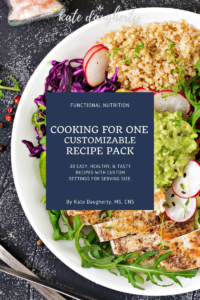
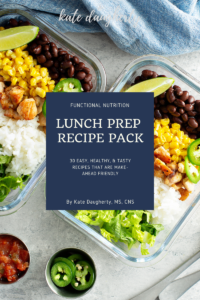
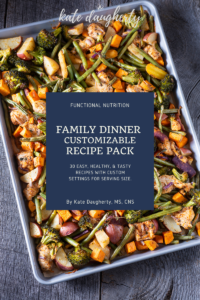
It’s one of my life goals to write a cookbook. And one day I will. It’ll be filled with enough background research to make your head swim, pretty charts describing how digestion really works, and all kinds of food science. That’s my jam. PLUS, you can count on aesthetic food photos. I get so much joy out of flipping through cookbooks with amazing food photography. OK, enough dreaming about the future and back to reality. In the meantime, I know what you probably REALLY care about is fresh ideas that make cooking at home easy. We’re in an interesting time where more and more we’re eating at home, and it’s about time to level-up your kitchen creativity! So, I’ve put together RECIPE PACKS. This is a curated collection of recipes (and a minor amount of background science) to give you some new inspiration for healthy at-home cooking. Choose your ‘style’ and start to incorporate a few new things- plant-based, low-carb, entertaining, 5-ingredient, lunch prep, family dinner, or cooking for one!   What’s Inside: Each recipe pack starts out with some basic science on WHY certain ingredients are included (or excluded). I give you a few tips for making the most of recipes (like swapping out ingredients, utilizing leftovers, and planning ahead). The Recipe Packs have 30 recipes. For each recipe, you’ll find a high-definition photo (like I said, aesthetics are important!), Ingredient List, Instructions, Notes on substitutions, AND nutrition facts per serving.   I’ve also included a bonus Weekly Meal Planner to help you create a personalized eating strategy. The Recipe Pack PDF is designed to be a self-directed exploration of new recipes. ((If you’d prefer a personalized meal plan and recipe pack according to your preferences, allergies, or intolerances- Reach out to Kate!)) SHOP RECIPE PACKS: SERVING SIZE CUSTOMIZATION: RECIPE PACKS One challenge I’m meeting is clients who are cooking for one OR cooking for a family. So often, recipes are written in 2-4 servings. What happens when you’re alone and DON’T want the same meal four times?? What happens when you’re a family of six?? –> Enter: Serving Size Customization. My “Cooking for One” and my “Family Meals” Recipe Packs allow you to change serving sizes in each individual recipe depending on your need. Using the Recipe Pack software, you’ll log in and toggle servings from one all the way up to 25! Here’s a quick video demonstration: More Details: Which Recipe Pack is Right for You? Family Meals Recipe Pack This collection is made for cooking for a group. You’ll find a number of slow cooker, pressure cooker, and one-pan meals that require low-effort to feed a crowd. I’ve included various proteins including chicken, beef, shrimp, and vegetarian options. There’s always the option to swap out a protein for one you enjoy (or add meat to vegetarian meals)! — CLICK HERE TO VIEW. Cooking for One Recipe Pack This collection is largely gluten-free, dairy-free recipes that work well in one-serving. You’ll find various omnivore and vegetarian options. I’ve also included a couple sweet treats and snacks. — CLICK HERE TO VIEW. 5-Ingredient Recipe Pack All 30 recipes in the 5-Ingredient Recipe Pack are made with 5-ingredients or less. Think healthy eating has to be complicated? THIS is my response. These recipes revel in simplicity but still deliver on satisfaction and flavor. This recipe book includes healthy breakfasts, lunches, dinners, and snacks. — CLICK HERE TO VIEW. Lunch Prep Recipe Pack On the weekday lunch prep grind? Here’s a collection of 30 recipes that are ideal for making in advance and eating as leftovers. This recipe pack includes omnivore and plant-based options to fit your goals. Recipes include salads, bakes, and bowls that stand-up to weekday lunch prep. — CLICK HERE TO VIEW. Entertaining Recipe Pack If you’re looking for ideas for finger foods, appetizers, dips and spreads that make for a fun gathering: this recipe pack is for you. Recipes range on the sweet to savory spectrum. Plus, I’ve included a ‘quick swaps’ guide for navigating food sensitivities with a crowd. ((Hint: always have fresh cut veggies in your spread)) — CLICK HERE TO VIEW. Low-Carb Recipe Pack Keto lovers check in. The low-carb recipe pack is ketogenic-diet friendly and leans into ‘clean’ keto. You won’t find bacon-wrapped deep fried butter in this PDF. Instead, I use healthy fats, animal proteins, and minimal dairy to hit the high-fat requirements of the low-carb approach. This collection includes breakfast, lunch, dinner and snack options. — CLICK HERE TO VIEW. Got other ideas for a Recipe Collection: Let me know!  I’m open to new ideas and suggestions to build the library of resources FOR YOU. If there’s a specific niche or diet you’d like to see a recipe collection for, send me an email. If more in-depth science and meal planning is what you need, check out my Therapeutic Diet Guides. Want to work with a functional nutritionist to personalize your diet? Struggling with hormone imbalance, IBS, weight gain, mood changes? Let’s look at FOOD FIRST. Read more about Functional Nutrition at The Facility here. Click here to schedule a free 15 minute phone consult with Kate!

Read More »
AIP Sweet Potato Pudding Bowl

AIP Sweet Potato Pudding: A Perfect Grain-Free Breakfast

Sweet Potato Pudding is like a dessert that you can eat any time of day. If I could, I would eat my Aunt KK’s Sweet Potato Pie at every meal; but this is a healthy alternative that almost hits the mark. If you’ve never had KK’s pie, you’ll think this is amazing. I actually need to give recipe credit to Dr. Mitchell Rasmussen, DC. He started making this pudding as a easy filling snack that is high in nutrients, high in healthy fats, and lasts a few days. It’s really perfect for that- make a batch, split it up into glass jars, and enjoy over several days. You can mix it up with toppings. That’s the real magic. Plus, it’s delicious warm as a grain-free porridge (AIP friendly) stand-in -or- chilled as a sweet potato pudding bowl. Try it out and let me know your favorite style. Related: AIP-Lemon Coconut Balls If you’re looking for an effortless, blend-and-serve type of recipe- here it is. Sweet Potato Pudding comes together quickly: with super-clean ingredients that keep you feeling your best.  This is my simple, go-to base ingredient list: -One large sweet potato – Baked (do it quick in an AirFryer or Instant Pot) –Coconut Milk, canned -Maple Syrup, or Liquid Stevia (optional) -Sprinkle of Sea Salt (Maldon is the beeest!) When it comes to toppings, let your imagination run! You could do seeds, nuts, coconut flakes, nut-free granola, cacao nibs, nut or seed butters, or even fresh fruit. If you prefer it on the savory side, leave out the sweetener and add chili flakes! My go-to combo is chia seeds and coconut flakes. Mix it up day-to-day to keep your leftovers from feeling boring. Make an Easy, Quick Breakfast or Snack with Sweet Potato Pudding! If you want to make it a balanced breakfast, add a scoop of protein. Then you’ll have a complete trifecta of macronutrients including slow-digesting carbohydrates, healthy fats, and bioavailable protein. Learn how to choose a protein powder here. My favorite coconut milk is by Thrive Market. I love the simplicity of their ingredients (no fillers, preservatives, or gums). And it’s cheaper. I always stock up in my Thrive Market boxes! Behind the Scenes of Sweet Potato Pudding: You May Also Like: Oat Milk Blueberry Chia Pudding Gluten-Free Oat and Almond Bread Shop This Article: DISCLAIMERS: The statements made on this website are not intended to diagnose, treat, cure, or prevent disease. You assume full responsibility for how you use this information. Always consult with your physician or other health professionals before making any diet or lifestyle changes. This post may contain affiliate links whereby if you purchase these products I receive a small percentage of the sale price. This allows me to keep the blog running and I thank you for allowing me to do that!

Read More »
Carrot Cake Stuffed Date

Carrot Cake Stuffed Dates: A Quick Paleo Snack

I love Carrot Cake. It’s my birthday cake of choice every year. I also love dates! They are so convenient and satisfying in a small amount. Alas, this snack was born. It’s not really anything new. It’s hardly even a ‘recipe’. Here’s how I assemble my carrot cake stuffed dates for a quick, allergen-friendly, paleo, hormone-balancing snack! I looove using Sunflower Seed Butter in snacks. It’s a nut-free alternative that is typically well-tolerated and provides great healthy fats. It’s a staple in my hormone healing diet. This is also a great choice for kids who have issues with peanuts or tree nuts. The best part about these Carrot Cake Stuffed Dates is that you don’t really have to do any prep work for them to be ready to eat in five minutes or less. I almost always have dates, sunbutter, and coconut in my pantry, and I always have raw carrots in the fridge. Viola! Related: Upgraded Classic: Nut-Free Granola If you’re feeling fancy, set out all the ingredients on a serving board and have a little snack plate to yourself. This is an excellent activity with kids as they start to learn their preferences. Salt is a fun one – they’ll learn moderation and balance of ingredients through trial and error! What is Sunflower Seed Butter?  Just like other nut butters, sunflower seed butter is simply a blend of sunflower seeds until they create a creamy consistency. Sunflower seeds are high in Vitamin E and Magnesium. You can find sunflower butter in most grocery stores, just remember to check for added ingredients. I like Thrive Market’s Sunflower Butter that’s made with ONLY ground sunflower seeds.   What modifications can I make? If you prefer to make this coconut-free, you can omit the coconut flakes. If you’re good with nuts, use almond or cashew butter instead. Don’t have carrots? Leave em off, it’s still good. Want a little more oomph? Throw on some chocolate chunks! When ingredient shopping, I use Thrive Market. They have the best prices for organic, shelf-stable products like dates, sunflower seeds, coconut, and sea salt. Click here to get a free gift with your first order. You May Also Like: Oat Milk Blueberry Chia Pudding Gluten-Free Oat and Almond Bread Shop Amazon Faves: DISCLAIMERS: The statements made on this website are not intended to diagnose, treat, cure, or prevent disease. You assume full responsibility for how you use this information. Always consult with your physician or other health professionals before making any diet or lifestyle changes. This post may contain affiliate links whereby if you purchase these products I receive a small percentage of the sale price. This allows me to keep the blog running and I thank you for allowing me to do that!

Read More »
Complementary Proteins on a Vegetarian Vegan Diet

Complete Plant-Based Protein + Complementary Protein Explained

Not all proteins are physiologically equal. Some proteins are complete proteins, ie proteins that contain all nine essential amino acids. Other proteins are incomplete proteins, i.e. they lack one or more of the nine essentials.  First, what are these essential amino acids? Well, there are 20 amino acids that combine in different chains to make up protein. Nine of them are called ESSENTIAL because our bodies can’t produce them, so we must get them from food. The nine essential amino acids are histidine, isoleucine, leucine, lysine, methionine, phenylalanine, threonine, tryptophan and valine.  Animal-based proteins are considered complete because they contain all the necessary amino acids (and more!). However, many plant-based sources of protein are incomplete. In order to get a complete plant-based protein it often comes down to combining foods; we call these COMPLEMENTARY PROTEINS.  Related: Mindful Eating: Finding a Healthy Relationship with Food Let’s Start with the COMPLETE Plant Proteins.  1 – TEMPEH I rarely recommend consuming soy products as a staple in your diet. This is largely due to processed soy products ubiquitous in our food supply. For more about soy, check out this post by Alissa Vitti.  If you DO choose to consume soy protein, Tempeh is made of fermented soybeans and is actually a complete protein. Although we typically lose the probiotic benefit of this fermentation due to pasteurization and cooking, it is still a better-for-you option. Tempeh is rich in protein, calcium, iron, manganese, phosphorous, and magnesium.  2 – LENTILS  Lentils tend to be very well-tolerated, even on the most restricted diets. They are quite versatile, easy to prepare, and inexpensive. They are 25% protein by weight! Bonus points here as lentils are also an excellent source of fiber.  For anyone on an exclusively plant-based diet, lentils are a great alternative to meat that still provides a complete amino acid profile. Try them in a Lentil Bolognese!  <<Click Here to get my 15-Ingredient Plant Based Meal Plan>> 3 – CHIA SEEDS  Chia seeds are a complete protein; but they also shine in other areas. A 1-ounce serving of chia seeds has 10.6 grams of fiber (both soluble and insoluble). Chia seeds are also a plant-based source of Omega-3 fatty acids (in the form of ALA). AND they contain phosphorous, magnesium, and calcium. Win-win-win.  While you’d be hard pressed to eat enough chia seeds to significantly contribute to your protein goals for the day, they do make a great addition to smoothies, salads, and bowl meals.  Related: Oat Milk Chia Pudding 4 – AMARANTH This is actually a gluten-free ancient grain with a nutty taste. To balance out a plant-based meal, this complete protein source also provides fiber, calcium, and some B-vitamins.  Although it is complete, one cup of amaranth only provides about 5.8 grams of protein. Similar to Chia, You’ll need to eat A LOT to get close to your daily protein needs with this grain.  <<Click here to try Amaranth Porridge by Bob’s Red Mill>> Let’s talk about COMPLEMENTARY PLANT PROTEINS As I mentioned, certain plant foods need to be eaten in combination in order to get a complete protein. In traditional cuisines, we’ll often find these foods paired together naturally! Here are a few key combinations: 1 – BEANS + RICE See? Traditional pairing here. Beans have lower levels of methionine (one of the essential amino acids). Conveniently, Rice is quite high in methionine. When consumed together, beans and rice form a complete protein providing all nine essential amino acids.  Beans are unmatched in their ratio of soluble fiber. They also provide minerals like copper, folate, iron, magnesium, and zinc. Rice can feel a bit like a “filler food” – but for a vegetarian, this combination should be top of mind.  2 – SEEDS + GRAINS This combination shows up often in seeded and sprouted breads. Ezekiel Bread is a popular sprouted grain bread made with whole grains and seeds. In this combination, it actually contains 18 amino acids! Sprouted grain breads tend to be easier to digest AND the vitamins and nutrients are more bioavailable.  3 – NUTS + GRAINS The classic combination I think of here is the Peanut Butter Sandwich. Peanuts, like other legumes, are low in methionine. When paired with whole grains (or even oats), we get all the essential amino acids for a complete protein.  Side Note I can’t Ignore: Have you seen the Game Changers graphic comparing a peanut butter sandwich to a steak?! We must take into account caloric density of foods versus protein content when attempting to eat a balanced diet. It is possible to get plenty of protein on a plant-based diet; BUT it takes more awareness and planning! Want to incorporate more Complementary Plant Protein in your diet? You can save even more time (and money) by shopping with Thrive Market! Use the ‘plant-based’ and ‘soy-free’ filters to find lots of great options. Wanna really make a difference in your health in 2022? Check out THE ELIMINATION DIET GUIDE. The Elimination Diet is really a chance to get to know yourself better, to develop personal nutrition, and address lingering symptoms. I believe that nutrition is so individualized. MY diet is going to look very different than your diet, and very different from our friends’ diets. They may all be ‘healthy’! To get to that point, you’ve got to put in the ‘hard work’ of being intentional with food choices and ultimately finding more freedom. You May Also Like: Mindful Eating: Finding a Healthy Mindset with Food What Is the Carnivore Diet? Shop My Faves: DISCLAIMERS: The statements made on this website are not intended to diagnose, treat, cure, or prevent disease. You assume full responsibility for how you use this information. Always consult with your physician or other health professionals before making any diet or lifestyle changes. This post may contain affiliate links whereby if you purchase these products I receive a small percentage of the sale price. This allows me to keep the blog running and I thank you for allowing

Read More »
Things to KNow before starting an Elimination Diet

5 Things to Know Before Starting an Elimination Diet

Before starting an Elimination Diet, here are some key things to know. The Elimination Diet is a powerful therapeutic tool for better understanding a personal nutrition strategy. It can help you reduce inflammation, restore your microbiome, uncover food intolerances, and live a more balanced life.  In my opinion, the most valuable part of the “diet” is the reintroduction phase. So often, we want to rush through this phase. We get to Day 31 of a 30-Day-Challenge and BAM! Pizza! MacNCheese! Nachos! All at once, we add things back in and we don’t actually take the time to learn WHAT foods work and which ones don’t.  So, I created The Elimination Diet Guide to help you see the big picture: what happens after you’re done eliminating things? What are you looking for as you reintroduce? I want you to be successful and fulfilled in this diet and ultimately find an eating strategy that works FOR YOU.  Thinking you’re ready? – Here are FIVE things to know before starting an Elimination Diet.  Related: Mindful Eating: Finding a Healthy Relationship with Food 5 Things to Know Before Starting an Elimination Diet… 1 – Plan Ahead Don’t jump into the diet simply thinking, “OK, I’ll cut out X,Y,Z for 30 Days and then see how I feel”. Instead, look at the journey from start to finish. Lay out exactly how reintroductions will go, and set your mindset to include that in your “diet timeline”. I think two months is more realistic for the Elimination/Reintroduction. That means 14 days of strict elimination, and beginning to add things in on Day 15. When you’re constantly reintroducing foods, you get novelty and avoid diet fatigue.  It can be helpful to take a serious look at your pantry, refrigerator, and freezer ahead of time. Are there things that will tempt you to ‘cheat’? Do you have plenty of nutritious, approved, satisfying foods? Set yourself up for success by looking ahead and stocking up on foods that will support the diet.  <<Sneak Peak: Click here to preview the Phase II Shopping List + Snacks>> 2 – This is the Gold Standard. Why not do a food sensitivity test? Because the Elimination Diet is the gold standard in determining food allergies/intolerances and sensitivities. A blood test (or other methods) is recognizably unreliable. If you have a Leaky Gut, you will flag for MANY foods that may or may not be problematic for you. If you have an Autoimmune Disease, you are likely to react to a great number of food proteins!  There isn’t a shortcut here. It’s best to put in the effort to do it right the first time, rather than go back and repeat the process when results are confusing.  It can be pretty challenging to sort through Elimination Diets, YES/NO Lists, and other resources available on the internet: They are all so different. How do you decide if the Whole30 or the AIP or the Low-FODMAP or the GAPS Diet is appropriate?!  The Elimination Diet Guide uses elements from all of the above and gives you a clearer picture of exactly what NOT to eat as well as what to EAT. I’ve done the work for you of compiling what I believe to be the broad-spectrum of trigger foods and systematically challenging them.  3 – This is not a weight loss diet. When you replace the Standard American Diet with real, whole, nutritious foods you may find that weight loss is a great side effect. However, it is NOT the focus of an Elimination Diet. Instead, this is a therapeutic eating plan meant to help you resolve inflammation, fix your gut, and minimize negative symptoms that may be attributed to your eating patterns (fatigue, brain fog, mood issues, acne, and more).  There is no restriction on calories, eating windows, or portions. It is a chance for you to get in tune with your body and honor what it is telling you. I provide Sample Meal Plans and Recipes as a starting point; but you’re free to add-in extra snacks and meals as needed. Forget your preconceived notions of the word “DIET” and think of this more as a NUTRITION STRATEGY for better health.  >>Skip The Rest and Check out The ELIMINATION DIET GUIDE<< 4 – This is easier than you think. Often, taking on a new diet can be a major lifestyle overhaul. Starting an Elimination Diet does not have to be that way. (Assuming you follow #1: Plan Ahead) When you focus on all the amazing things you CAN eat, it feels exciting!  Remind yourself of your “WHY” behind the diet. Is it worth devoting 60-days of change in order to minimize your main symptoms? Will you really regret it?  One of the best tips before taking on the Elimination Diet is talk about it! Ask your friends and family for their opinion; I bet you find you have a lot of people willing to support you. Social events, family dinners, and travel plans are not a reason to give up. Use those times as a chance to empower yourself and those around you about PUTTING YOUR HEALTH FIRST.  You will not be eating this way forever, and there will likely be a time in your life that you eat a slice of pizza.  5 – You may find out more than you want. I can guarantee you’re going to learn about yourself through The Elimination Diet. You’ll learn your habits, your priorities, and maybe a little more than you wanted to about your nutrition. Spend some time considering that. What happens if you do the Elimination Diet and uncover that something like ALMONDS are a culprit triggering your migraines? Are you willing to admit when certain foods you LOVE are also bringing you down?  Reframe it as awareness. If you do the diet and discover unpleasant food sensitivities, there’s no one that is checking up on you and giving you a lashing if you slip up. Instead, it’s about having the power.  “I KNOW
Read More »